
Rajan said investments should return after initial investor worries over Brexit.

Modi government needs to focus more.

FM should avoid proposals such as to tax financial transactions and fringe benefits

Reserve Bank of India (RBI) Governor Raghuram Rajan's decision to cut rates last week surprised even top officials.

The remarks came amid reports of mounting tension between the finance ministry and the RBI over the autonomy of monetary policy makers.

Next time you swipe, ask yourself, do you really need it or do you just want it?

'Till now, we were under tremendous stress. The economy was not recovering, the financial cycle was not moving and the banks were not supporting.' 'With the government pumping in money to the banks and asking the NBFCs to give priority to the MSME sector, there will be a revival.'

A strengthening dollar, rising interest rates, tightening liquidity and a surge in oil prices - all are combining to create a toxic atmosphere for EM assets, says Akash Prakash.

Are we adopting an idea whose time has come and gone? My feeling is, yes, says ex-banker C Joseph Chacko in the fourth article of the series on inflation targeting.

'Investors hate uncertainty and the demonetisation move certainly creates that.'

While good news from several quarters has been trickling in, El Nino might be a dampener, says T N Ninan.

A 15 per cent corporate tax rate for services companies in SEZs, setting up a fund for deep-tech startups and establishing clusters to demonstrate design-to-manufacturing capabilities of tech firms were some of the key demands made by the IT sector at the pre-Budget consultation on Monday. The participants shared their views and suggestions regarding Big Data, incentives for encouraging setting up of data centres, fiscal incentives for data localisation, incentives for pushing digital penetration in rural areas, and corporate guarantee to startups for competing with other nations.

With buyers playing safe, projects such as Delhi-Gurgaon Expressway find it difficult to get new concessionaires

Raghuram Rajan rejected the argument that inflation has come down largely because of "good luck" stemming from low oil prices.

The PM said Japan and the Indian diaspora has a big role to play in India's growth story.

Following is the full text of Prime Minister Manmohan Singh's speech at the Central Party School in Beijing on Thursday:

Several brokerage houses have given a year-end target of as high as 30,000 for the BSE bourse's benchmark Sensex, with fund managers telling investors not to redeem though the index is still only around 25,000.

The new Chief Economic Advisor Krishnamurthy Subramanian believes that more than unemployment, it is the quality of employment which needs to be focused on. In an interview with Arup Roychoudhury and Indivjal Dhasmana, Subramanian said that controlling inflation was the Modi government's biggest achievement.

The banking sector in India is reeling under Rs 8 lakh crore of non performing assets (NPAs) or bad loans, of which PSU banks alone account for over Rs 6 lakh crore.

'The government's projections for 2019-2020 will be disappointing big time.'

"Reform is not an end in itself. Reform for me is just a way station on the long journey to the destination. The destination is the transformation of India," he said.

S Naren, CIO of ICICI Prudential Mutual Fund, in an interview with Chandan Kishore Kant, says cyclicals will offer good value.

If GDP growth in Q2FY18 remains below 7%, the outlook for Samvat 2074 would remain uncertain at best, says Nitin Desai.

Taxpayer satisfaction is a part of the matrix of key performance indicators of the administration.

Data used for the graph and cited elsewhere in the column were obtained from various publications of the RBI.

FM indicates adherence to fiscal road map, benign tax rates, correction in inverted duty structure

'We are at $2.7 trillion and 2024 is not far away.' 'The country will need to grow by 9% every year for 5 years continuously and raise the aggregate investment rate to 38% of GDP to achieve the government's target of turning India into a $5 trillion economy.' 'Given the fact that we are only growing at about 5% and our investment rates are only about 30%, it may take a number of years before we can reach that targeted level.'

India's good fortune, experts in the US feel, is not the result of a fundamentally strong economy, but because it is the best of a bad set of options.

There are conflicting signs on India's investment cycle.

'The Reserve Bank's independence has remained a work in progress, an enduring challenge that the nation has been grappling with on an ongoing basis,' says RBI Deputy Governor Dr Viral Acharya.
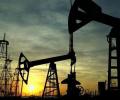
Soft oil prices are expected to persist in 2015 and will be accompanied by significant real income shifts from oil-exporting to oil-importing countries.

'We should not minimise the seriousness of Chinese encroachments because their perception is different.' 'Nor should we fall into the trap of accepting so-called 'buffer zones' in areas of overlapping claims. We cannot have buffer zones in our own territory,' asserts Ambassador Shyam Saran, a former foreign secretary.

Investors with stalled projects and mounting bad debt will refinance their loans.

While Modi must worry about the electoral backlash of bailing out state-owned banks, China's communist rulers face fewer constraints.

Some type of global shock adds to the allure of the dollar.

Kenneth Rogoff, professor of public policy and economics at the Harvard University, tells Dilasha Seth on the sidelines of the Delhi Economics Conclave that public sector banks will need to take a one-time haircut to address non-performing assets.

He endorsed transparency and financial stability in addition to issues related to inclusive growth and development, write Puran Singh and Nupur Pavan Bang.
.jpg)
The latest macro-economic numbers confirm the economy trundles along in a low growth trajectory, while inflation climbs.

A government that confuses PowerPoints for policy is delaying structural change too much.

'The government has to stop trying to fix things for lenders, projects, homeowners and developers and think instead about how to fix the market for houses,' says Mihir S Sharma.
 © 2026 Rediff.com - Advertise with us - Disclaimer - Privacy Policy - Sitemap - Feedback - About us - Terms of use - Grievances